
What editors and producers practise in our newsroom workflow sessions
A look at how the Newsroom Workflow Training sessions run: story planning, ingest, editing queues and handover, and what teams bring with them to the room.
6 min read
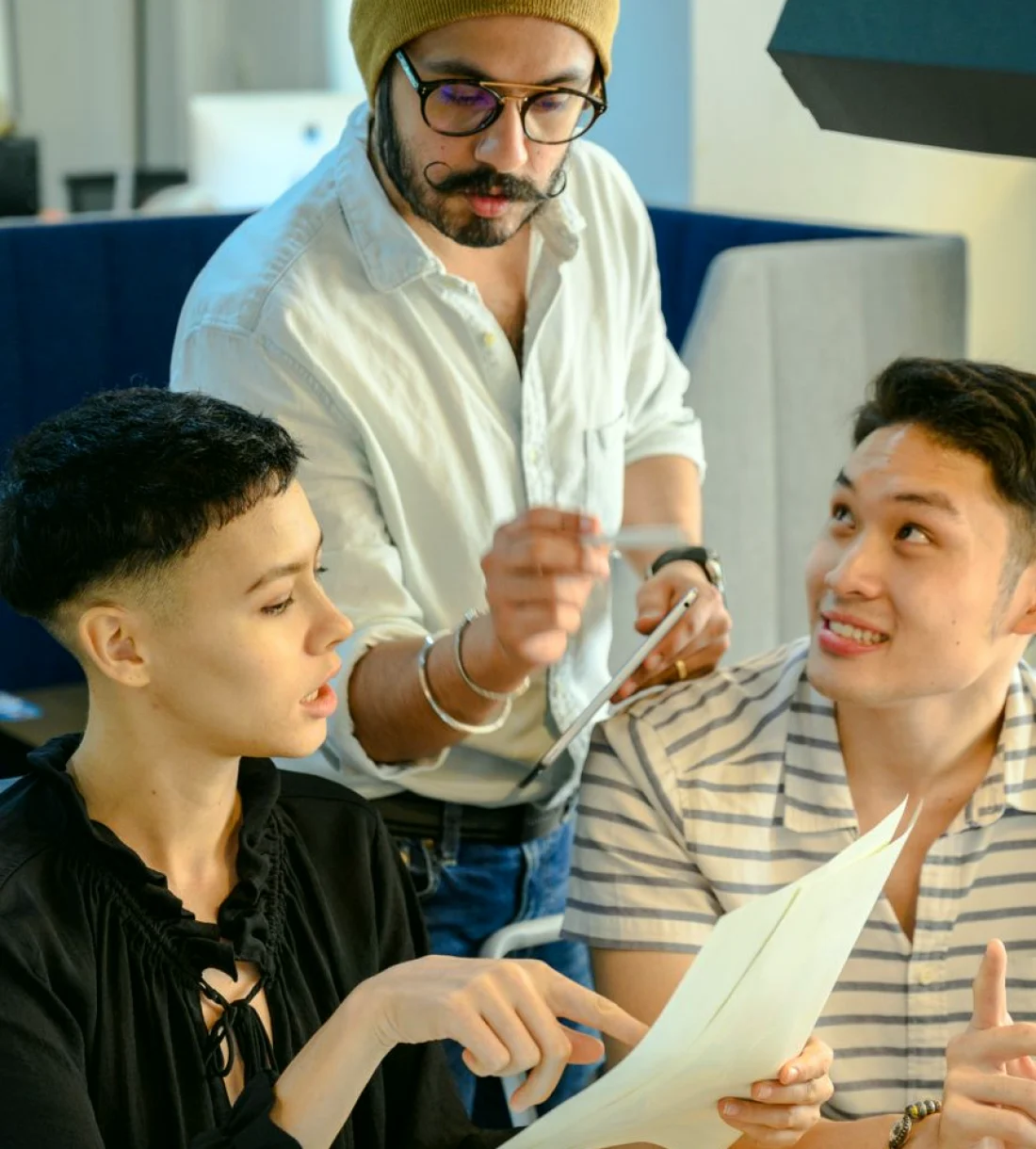
Why we run the training the way we do
Newsroom Workflow Training is built for editors and producers who already know how to find and tell a story, but lose time between the moment a story is agreed and the moment it goes to air. Most of that time is not lost in the edit itself. It disappears in small gaps: an unclear brief, footage that arrives without notes, a queue nobody has reordered since the morning meeting.
I design these sessions around those gaps. Each one is delivered on site or at our Taunton base, depending on what suits the team, and it follows the order in which a story really travels through a building: planning, ingest, editing queues and handover. Nothing is taught as theory first. We start from the way your team works now and tighten it step by step, so that people leave with habits they can use on the next shift.
- Planning, ingest, editing queues and handover
- On site or at our Taunton base
- Starts from your current routine
Story planning before anyone picks up a camera
Planning is the first block, and it is the one teams most often rush. We ask producers to write a short running note for each story: what the piece must show, who is available to speak, what graphics or archive will be needed and when the item has to be ready. It sounds modest, yet it removes a surprising number of late calls and re-shoots.
In the room we work through live examples brought by the participants. A producer describes a story from the last week, and the group rebuilds its plan together, noting where the brief was thin and what the editor would have wanted to know earlier. Priority is given to the decisions that cost the most time when they are made late, such as the length of the piece and the format it is delivered in.
- A short running note for every story
- Rebuilding real stories from the past week
- Length and delivery format agreed early
Ingest and naming: keeping footage findable
The second block covers ingest, which sounds dull until a breaking story arrives and nobody can find the right clip. We look at how material comes into the building from cameras, mobile phones and agency feeds, and where it is stored once it has arrived. The aim is a clear, agreed way of naming files and logging them so that an editor who was not on the shoot can still work confidently.
We keep the rules short enough to be remembered under pressure. A consistent file name, a one-line description and a note of anything sensitive or restricted cover most of what an editor needs. Participants try the method on a mixed folder of material and see for themselves how much faster a search becomes when the labels follow a pattern rather than personal habit.
- Agreed file naming that survives a busy shift
- One-line description for each clip
- Flagging restricted or sensitive material
Editing queues and who decides what comes next
Queues are where a newsroom's priorities become visible. If three editors each choose their own next job, the most urgent item may sit untouched while a longer feature is polished. In this block we look at how to set the order of work, who is allowed to change it and how that change is communicated without a shouted conversation across the room.
We practise with a deliberately crowded list of items, each with a deadline and a different level of finish. The group agrees a ranking, then a late story is added and the ranking is revised. People often find that the hardest part is not the decision but saying it aloud, so we agree simple phrases and a shared board that make a change clear to everyone at once.
- Setting and revising the order of work
- One named person owns the queue
- A shared board instead of verbal reshuffles
Handover between shifts and between desks
Handover is the final block and, in my experience, the one that pays back soonest. A story that is half finished at the end of a shift needs a note that tells the next person what is done, what is outstanding and where the files are. Without it, the incoming editor spends the first part of the shift reconstructing what the last one meant.
We write handover notes together, using a plain template that fits on one screen: status, next step, location of material and any editorial concern. Teams then swap notes and try to carry on from someone else's work. The exercise shows quickly which details were missing, and it tends to change how people write at the end of the day far more than any instruction would.
- A one-screen template for every handover
- Status, next step, file location, concerns
- Swapping notes to test whether they work
What teams bring and what they take away
Before a session I ask the team for a few things: a recent story that went smoothly, one that did not, and a description of how material moves from camera to edit. These are enough for us to tailor the examples to the room, so nobody spends the day on a situation that does not resemble their own.
By the end, participants have a written planning note, a naming rule, a queue method and a handover template that they can start using straight away. Producers and editors usually leave with the same page in front of them, which matters more than any single technique. If you would like to discuss the format and length that would suit your newsroom, the contact page is the place to begin.
A newsroom rarely slows down because its people lack skill. It slows down because the small handovers between them are left to chance. The training gives those moments a clear shape: a planning note, a naming rule, an agreed queue and a handover that can be read in a minute. If that sounds like the part of your day that needs attention, we would be glad to talk it through.
Priya Nair
Newsroom Workflow TrainerPriya designs and delivers training on newsroom workflows, from story planning to final delivery.