
What Kit Should a Single-Person News Crew Actually Carry?
The question we hear most from solo reporters: what goes in the bag. Helen Marlowe answers it from the coaching room, with a short list and the reasons behind each choice.
6 min read
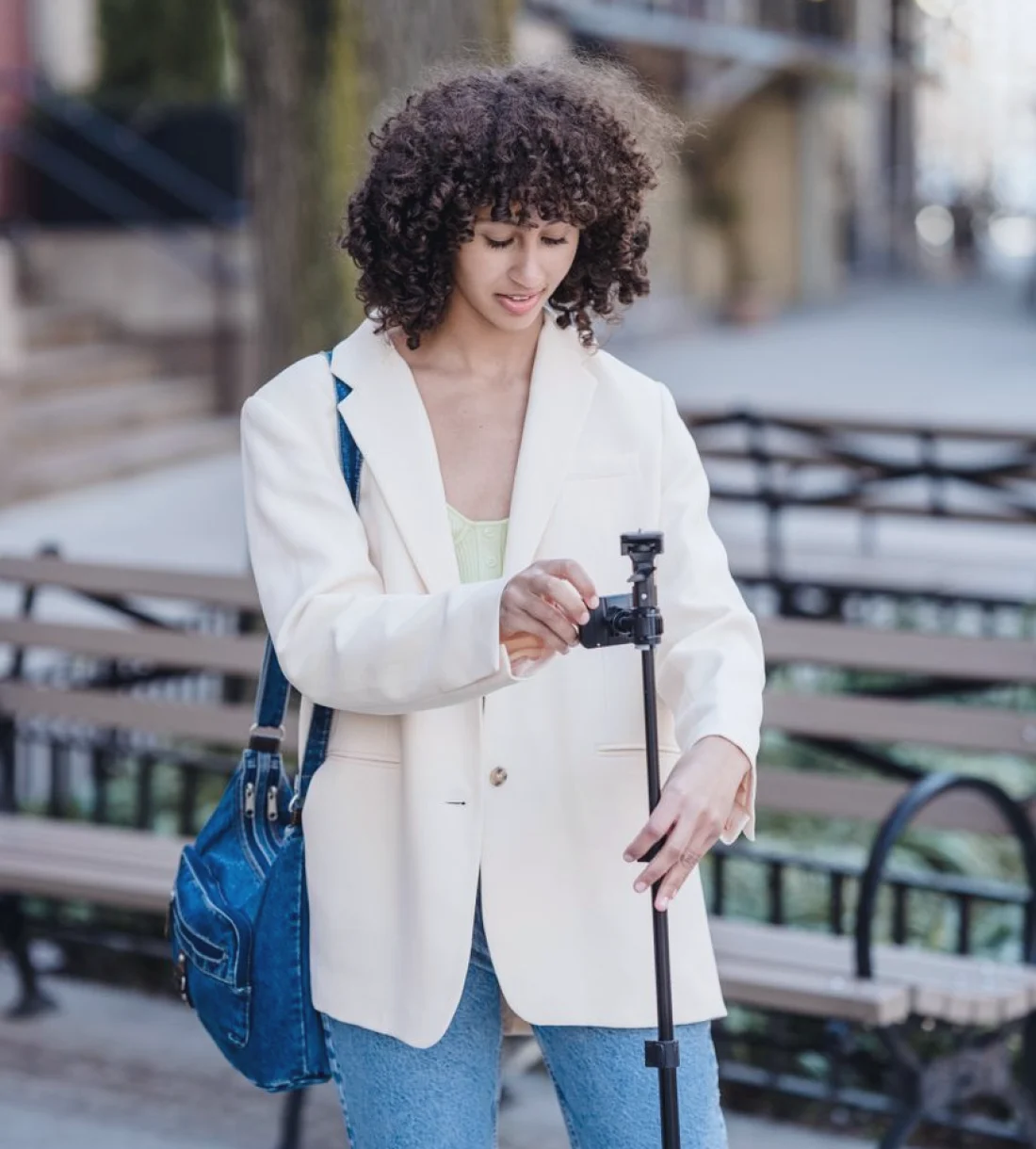
The question behind the question
Almost every coaching enquiry we receive begins in the same way: someone asks what they should buy. Behind it sits a more useful question, which is what a single person can set up, operate and carry for a full shift without dropping the story. Kit is only worth owning if you can use it under pressure, with a producer waiting and the light changing.
In the coaching room we start from the person, not the catalogue. We ask how far you walk between jobs, whether you travel by car or train, and how long you usually have between a call and the first piece to camera. A reporter who works close to the office can carry more than one who covers a rural patch alone.
The honest answer is therefore shorter than most people expect. A solo crew needs a camera that can be run by one hand, a stable support, clean sound and a way to send material back. Everything else is a luxury that has to earn its place in the bag.
The core four items
We build almost every kit around four things: a compact camera, a tripod, a microphone and a phone or tablet for filing. If any one of them fails, the story suffers, so we spend our coaching time making sure each is understood rather than merely owned.
The camera should be small enough to hold steady and simple enough to set without looking down. Menus buried three levels deep are a problem at a breaking scene. We teach a fixed starting setup so that frame rate, exposure and white balance are settled before you leave the building.
The tripod matters more than most people assume. A shaky shot is the quickest way to make a good interview look careless. We favour a light but properly rated head that you can level in seconds, and we practise doing exactly that until it becomes habit.
The phone sits fourth because it carries your connection, your notes and often your second angle. We treat it as part of the kit rather than an afterthought.
- Compact camera you can operate one-handed
- Tripod with a fluid head that levels quickly
- Microphone chosen for the job, not the box
- Phone or tablet for notes, checks and filing
Sound before picture
Viewers forgive a plain picture far more readily than muffled or noisy speech. If you have a limited budget, spend it on audio first, and learn to listen through headphones every time you record, even for a thirty-second answer.
A lavalier clipped close to the speaker is the dependable choice for interviews, while a short directional microphone on the camera helps for ambience and quick questions. We show reporters how each behaves in wind, in corridors and beside traffic, because the same microphone sounds very different in each place.
Spare batteries and a windshield cost little and save a great many interviews. We ask everyone to check levels at the start of each answer, not once at the start of the day, since conditions shift without warning.
This is the part of the coaching where people tend to be surprised. Good sound is mostly habit and positioning, and it improves quickly once you know what to listen for.
What we usually leave at home
The bag grows over time, and most of what accumulates is rarely used. Large lighting rigs, several lenses and heavy sliders look impressive but slow a lone reporter down. When the story breaks, speed of setup decides what reaches the bulletin.
We encourage a short test: if you did not use an item on your last five jobs, take it out for a fortnight and see whether you miss it. Most people do not. The weight saved shows in steadier shots and a fresher approach at the end of a long day.
There are exceptions. A small on-camera light is worth keeping for dark interiors, and a spare card should always stay in the same pocket. But each extra piece should have a clear job you can name.
Carrying less also helps your safety and your movement. You can step back from a crowd, change position quickly and keep an eye on your surroundings instead of your equipment.
- Large lighting rigs that take minutes to place
- Extra lenses you rarely change in the field
- Accessories with no clear job in the bag
Practising before it matters
Owning the right items is half the work. The other half is rehearsal, because the first time you fit a new microphone should never be at a live scene. Our coaching sessions are built around repeated, timed setups so that the routine settles into your hands.
We ask reporters to set up, record a short interview, check playback and pack away, then do it again faster. The second and third runs usually reveal the small snags: a cable in the wrong pocket, a setting that resets, a clip that rattles.
Between sessions we suggest practising in ordinary places, such as a street, a station concourse or a quiet office, where nothing depends on the result. Mistakes made there cost nothing and teach a great deal.
By the end, most people can be filming and listening within a couple of minutes of arriving, which is the real measure of a good kit.
Matching the kit to your patch
No two reporters work in the same conditions, so we finish each coaching session by adjusting the list to the person. Someone covering council meetings indoors needs a different bag from a reporter chasing weather and traffic in the open air.
We look at your usual journeys, your newsroom's formats and the way material gets back to base. If your editors expect a particular file type or delivery method, the kit and the settings should agree with it from the start.
Autumn brings shorter days and wetter pavements, so these weeks are a sensible time to review covers, spare batteries and the light you can rely on. A small check now avoids awkward surprises through the darker months.
If you are unsure where to begin, talk to us through the contact page and we will go through your situation in plain terms.
The most common question has a calm answer: carry less than you think, and know every item well. A camera you can run with one hand, a steady tripod, good sound and a phone for filing cover nearly every situation a solo crew meets. Practise the routine until it is quick, review the bag as the seasons change, and let the story, not the equipment, decide what you bring along.
Helen Marlowe
Managing DirectorHelen leads kowziro and sets the standards for every production. She spent years producing regional television news before founding the company.